
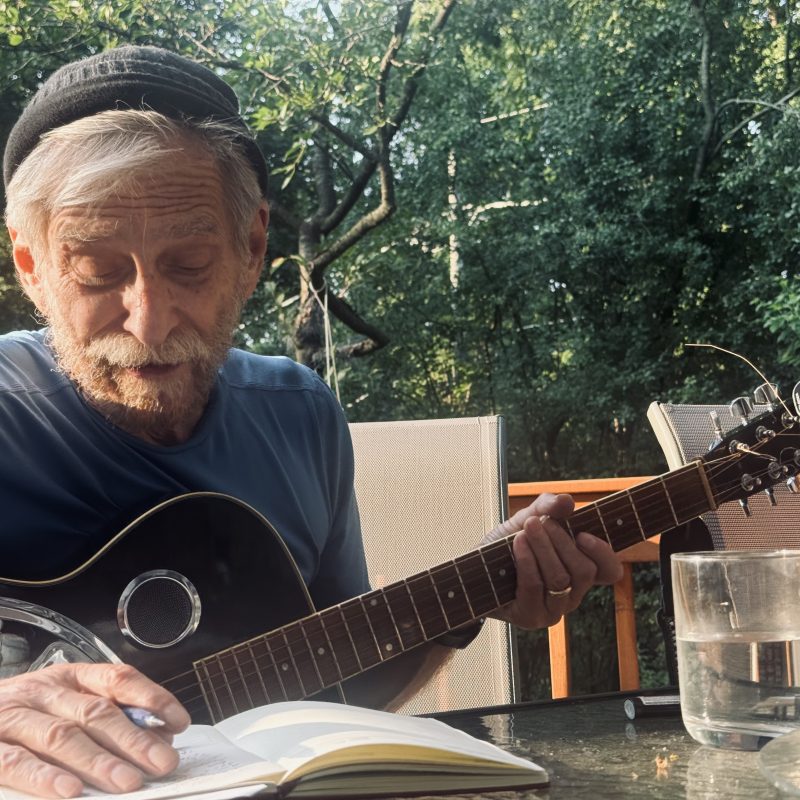
Michael Fisher needed to live. A decade of serious health battles, thirteen years of chronic pain and uncertainty, and countless hours under the buzzing hospital lights had taken their toll. Bigfish Chitown became his way to survive. What began as a fight for life eventually became a celebration that inspired his music and newest release, Dance Apocalypse.
Before his multiple diagnoses, Bigfish Chitown was dedicated to a special project using sound and video to comfort people living with dementia. After years of work, it was over in a flash. That phone call everyone fears came. Months of research stopped, and his focus shifted. Drawing inward, he turned to healing and reflecting on how music can affect wellness.
During recovery, that reflection met an urgent need to create, even as he struggled with the debilitating effects and traumas of a body that had survived so much. When he had the energy, Bigfish wrote lyrics. Between doctor’s visits, he riffed on the guitar. Sitting at his desk late at night and fighting nausea, he drummed out beats.
Throughout the pain and fatigue, he needed to create, so he brought his own material to Suno, experimenting with it as a tool to achieve a professional level of quality. Reaching that standard became cathartic. The empowering process led to 9LD (Nine Lives Down), an album documenting his recuperation and transformation.
With healing came a new outlook. Rather than revisiting pain, Bigfish Chitown wanted to reflect gratitude, joy, and hope. As the songs developed, they began to explore themes of humanity through fear, conflict, love, and redemption. Together, the music became a theatrical concept album entitled Dance Apocalypse. At its heart is a survivor’s simple message: our future is not written for us; we have the power to shape what comes next.
Musically, Dance Apocalypse blends energetic dance-pop with cinematic orchestration, beatboxing, and theatrical storytelling. Bright melodies, propulsive rhythms, and evolving arrangements allow the songs to unfold like scenes on a stage.
“Ain’t Written Yet” uses beatboxing as part of its musical language while delivering the album’s message that change remains possible. “Smokin’ Keys, Turn Back the Atomic Clock” draws on the ominous symbolism of the Doomsday Clock, while “Upendo”—a Swahili word associated with love—moves in a Latin-influenced direction, celebrating love, life, and happiness.
The creative process was deeply personal. Bigfish Chitown wrote the songs, developed the ideas, and used AI as a creative partner for orchestration. He began with his own guitar playing, vocal ideas, rhythms, and beatboxing before carefully shaping each track.
The process took a year, during which Bigfish was fighting and recovering from throat cancer. Small details, including references to the Atomic Clock, hit harder when the author is a survivor. The album’s central message—that even in uncertain times, hope is always worth choosing—carries a particular integrity when it comes from an artist like Bigfish Chitown.
With a stage adaptation already in development for 2028, Dance Apocalypse feels like a continuation of a creative journey that has sustained Bigfish through some of the most difficult moments of his life. More than a concept album, it is ultimately an invitation to feel, reflect, and reckon with it all.
Stream Dance Apocalypse and follow Bigfish Chitown:
Related Content
Billy Spanton’s “Only for a Little While”: A Touching Ballad About Embracing Every Blessing
September 08, 2026