



































Kencade’s Back Like I Never Left is at its best when the Mississippi rapper stops treating the album like a comeback statement and simply lets his history speak for itself.
Seventeen years is a long time to disappear from music, and that makes Kencade’s return immediately interesting. The title Back Like I Never Left suggests confidence, but the album itself is more compelling when it acknowledges that plenty happened while he was gone.
Kencade comes into the project with a perspective that cannot be manufactured. He started rapping as a child in West Point, Mississippi, recording early demos with whatever equipment was available before taking his music through Jackson, Memphis and eventually Baltimore. That history gives the album a lived-in quality, especially when he moves away from broad declarations and focuses on struggle, betrayal and survival.
The Southern influence is obvious throughout. Kencade has cited Three 6 Mafia and Skinny Pimp as important inspirations, and there is a familiar regional toughness to the way he approaches the record. Still, the album works better as a personal document than as an attempt to recreate any specific era of Southern rap.
“Judas” is one of the tracks that best fits that approach. Its title alone points toward distrust and betrayal, two ideas that sit naturally beside the harder experiences Kencade has spoken about in his life. “The Chosen One” pushes in the opposite direction, leaning into confidence and self-belief, while “Freedom Ain’t Free” suggests a more serious and reflective side of the project.

Then there is “I Need A Material Girl,” the most commercially positioned song on the album. Kencade says the track has received radio play across several markets, including New York, London, Mississippi and Los Angeles. It gives the record a lighter, more accessible entry point, though it is not necessarily the song that tells you the most about who he is. The single was released April 11 through Misguided Records.
The most impressive part of Back Like I Never Left may be how completely Kencade owns the process. He says he wrote the songs, created the beats, produced the material and handled the mixing himself. That independence gives the album consistency, but it also means the strengths and weaknesses belong almost entirely to him.
That can work in his favor. There is a rawness to the project that suits an artist returning after such a long absence. It does not feel over-designed, and it rarely sounds like Kencade is trying to force himself into whatever rap currently looks like.
His earlier album Me, Myself Da Show reportedly crossed 500,000 global streams, but the more interesting question here is whether Back Like I Never Left establishes a reason to keep listening now. It does, mostly because the album has a point of view. The new project officially arrived July 1, 2026 with 10 tracks, which is also confirmed by his current Apple Music and Amazon Music listings.
Kencade is strongest when he sounds like an artist with scars, memories and something specific to prove. Back Like I Never Left is not flawless, but it has identity, and after 17 years away, that matters more than simply sounding current.
Stream and follow Kencade:
Instagram | Spotify | Apple Music | Amazon Music
Related Stories
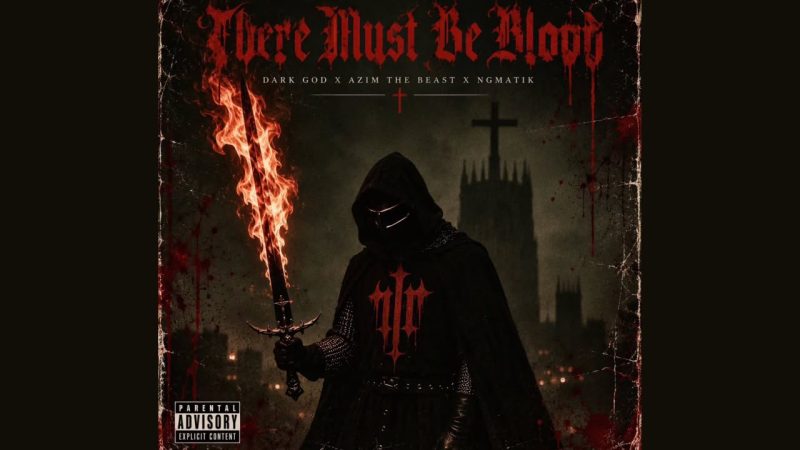
Dark God and Azim The Beast Build a Horror-Inspired World on There Must Be Blood
Some projects establish their identity through storytelling, while others make their intentions clear through atmosphere and imagery. There...

Why Another tracked The Color Is Off live in the room together
Why Another pair a 12-string guitar and Grizzly Bear-worthy harmonies on the EP The Color Is Off, five...

Inside Kevin Anglade’s THE BLACK BOX: Music, Identity and Resistance
Kevin Anglade explores social expectations and systemic oppression on THE BLACK BOX, connecting a 14-track album with BRANDED...