













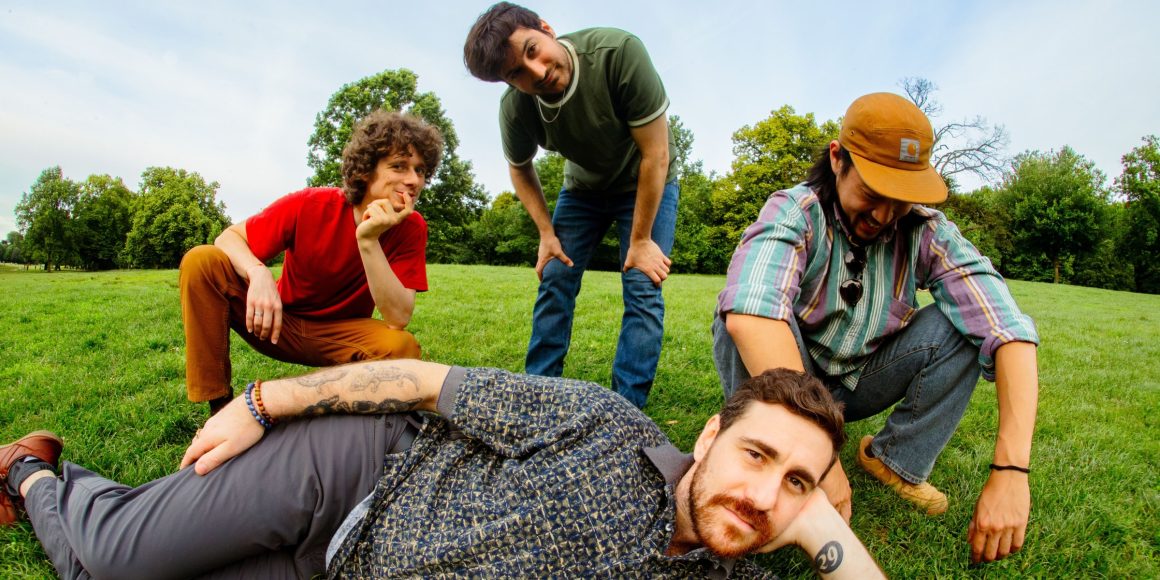















The story of Psychic Sound Machine is rooted in the independent music scene of 1990s Austin, where Steven Bonn and his friends spent their time playing music, testing ideas, and discovering what happened when they made noise together. From 1991 to 1997, they experimented under the name Dish Machine Operators (DMO), exploring sounds and approaches that allowed their music to develop without being confined to a single genre. Money was scarce, and the work that paid the bills was often far removed from the stage. But for Bonn, making music was never simply about building a career. It was about the experience of creating something with other people.
During those years, the musicians explored a wide range of sounds, moving between the storytelling traditions of folk music and the abrasive textures of early industrial music. Their approach was less about following established formulas than seeing where experimentation might lead. Some of the material they developed eventually found its way into songs performed under the name The Onlys. Bonn has recently returned to working with the band, revisiting music from an earlier chapter of his life. However, Psychic Sound Machine represents a distinct part of his musical journey, one shaped by the freedom to explore, experiment, and discover new possibilities through collaboration.
For Bonn, the most meaningful part of making music lies in the patterns and synchronicities that emerge when people play together. A musical idea can begin in one place and evolve in an unexpected direction as other musicians respond to it. These moments of connection cannot always be planned or explained; they happen naturally through listening, experimenting, and allowing each person to contribute. The result is something that no individual could have created in quite the same way alone. It is this shared process of discovery, rather than any particular achievement, that lies at the heart of his relationship with music.

That perspective also shapes how Bonn views the relationship between musicians and their audiences. He is less concerned with the idea of having fans than with the sounds produced by instruments and the patterns musicians create together. For him, making music is a natural form of expression, much like whistling simply because the moment inspires it. Recognition may come with the territory, but it is not what drives him. The real reward is the experience itself: the interaction, the unexpected connections, and the satisfaction of creating something together.
His advice to his younger self reflects that same practical outlook. Save for good equipment, he suggests, or learn to make something compelling with whatever is available, even if that means beating on a box. Either approach can work. The important thing is to start making music instead of waiting for perfect conditions. And if the noise becomes too much, he has one final recommendation: wear earplugs. It is advice that reflects years of experimentation and a straightforward belief that making music does not need to be more complicated than it is.
After spending years away from some of his former bandmates, Bonn is now exchanging music with them again. The renewed connection has become a particularly rewarding part of his life, offering an opportunity to share ideas, explore sounds, and rediscover the creative chemistry that brought them together in the first place. There is no need for an elaborate plan or a grand comeback narrative. The value lies in the simple act of making music together and seeing where it leads. For Bonn, the enduring significance of music is found not in labels, recognition, or the pursuit of a particular outcome, but in the friendships, creative exchanges, and unexpected moments of connection that keep the process alive.
Related Stories

SCOPE20 Unveils “JAY Z” Music Video and Lead Single From Upcoming Album: ART OF WAR
ATLANTA — Fresh off the KING WOLF TOUR, supporting UnoTheActivist and Omega Music Group, Atlanta underground artist SCOPE20,...
SKIP-DAWG Makes a Confident Comeback on ‘Lyrical Playboy’
Confidence can be a curious thing. For some, it comes naturally, while for others, it takes stepping into...

GRIM-VIRUs Turns Life’s Darkest Chapters Into Music With Latest Single “Tick Tock”
Some artists draw inspiration from the world around them, while others look inward, transforming their own experiences into...