
































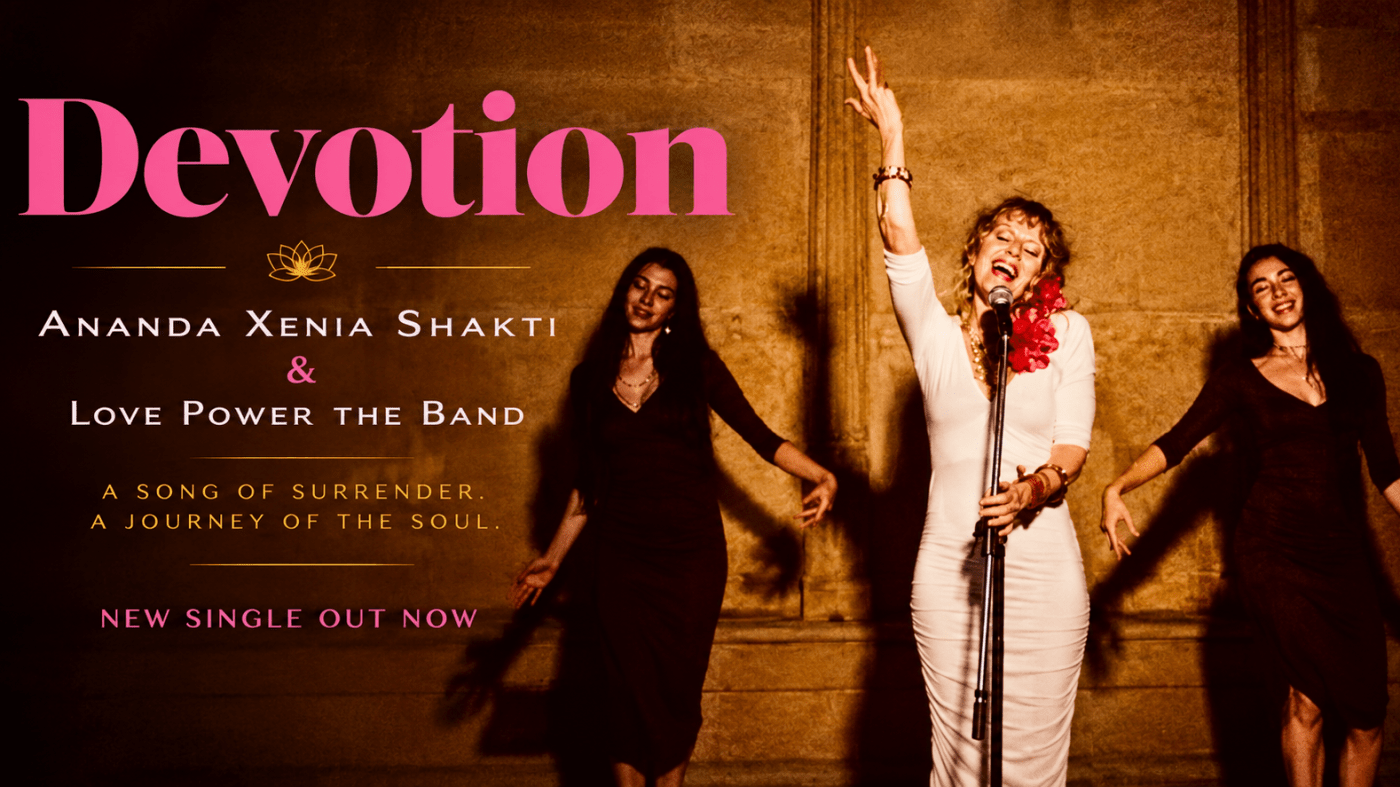
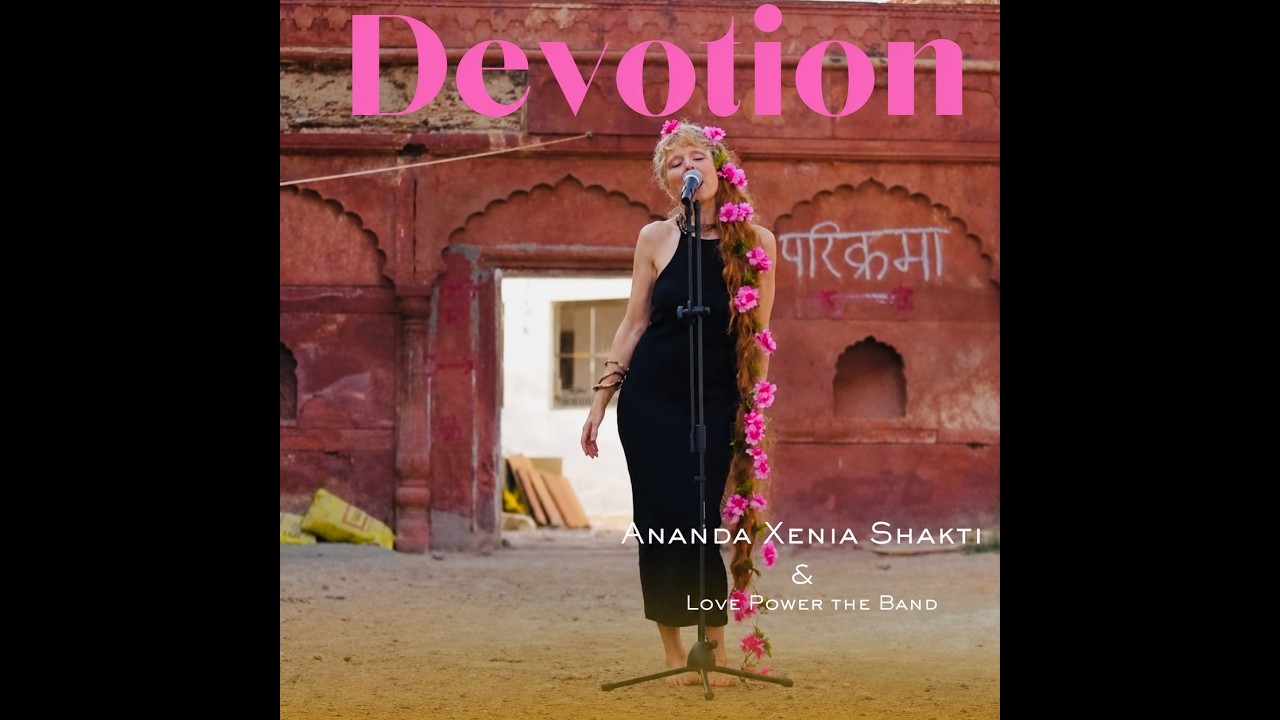
Ananda Xenia Shakti turns the quiet surrender of “Devotion” into a striking continuation of the rebellious spirit that first shaped her in punk.
Ananda Xenia Shakti has been chasing freedom for a long time. The fascinating thing about “Devotion,” her latest single with Love Power the Band, is how completely the definition of freedom has changed while the pursuit itself remains recognizable. Once known as Xenia Holliday, she was part of The B Girls, the pioneering all female punk group whose story crossed paths with The Clash, CBGB and Blondie. She toured with The Clash during the London Calling period and contributed backing vocals to Blondie’s AutoAmerican. Those are serious punk credentials, but “Devotion” is not interested in trading on them.
Instead, the song asks a question that would have sounded suspicious in punk’s original ecosystem: What if freedom is not about fighting harder, but surrendering? “Devotion” was born during a silent meditation retreat in Andhra Pradesh, India, where Ananda became physically ill during the night and found herself unable to meditate. She began quietly singing the names of Radha and Krishna, and a melody developed around the Hare Krishna Maha Mantra. She describes the song as something received rather than simply composed.
That distinction makes more sense once the recording begins. “Devotion” does not behave like music assembled around a rigid pop formula or a carefully timed second chorus. It unfolds through repetition, atmosphere and incremental emotional movement. Love Power the Band gives the music room to breathe, allowing sounds to accumulate without crowding the central vocal. Ananda sings without the usual machinery of pop persuasion. Her voice sounds intimate, occasionally fragile and completely committed to the mantra’s circular motion.
Repetition becomes transformation. The first time a phrase arrives, it is information. By the fifth or tenth, language begins losing its ordinary function and the listener is no longer processing words so much as inhabiting sound. Hip hop understood repetition. Funk understood it. Gospel certainly understood it, as did African diasporic musical traditions long before modern popular culture discovered the loop. Repetition does not necessarily mean nothing is happening. Sometimes repetition is precisely how something happens.
There is also something wonderfully circular about Ananda arriving here after punk. Her younger self pursued liberation by rejecting structures outside herself. Her present music investigates the structures inside: ego, fear, conditioning and the restless mind forever insisting upon another thought. Different battlefield. Same insurgency. The song’s origin sharpens that point because “Devotion” did not emerge from comfort. Ananda was sick. Instead of escaping the discomfort, she sang through it.
That makes the record’s serenity more convincing. Peace is not presented as the absence of difficulty, but as something discovered inside it. In 2026, there is also something quietly confrontational about making music that requires patience. We live inside an economy engineered to interrupt us. Songs fight for seconds, screens demand swipes and silence becomes an empty space somebody desperately wants to monetize. Then Ananda Xenia Shakti and Love Power the Band arrive asking the listener to remain still.
“Devotion” is not punk rock, but quiet should not be confused with compliance. After all these years, Ananda is still rebelling. She simply does not need the amplifier turned to ten anymore.
Related Stories

I SWIM WITH SHARKS INC. IS ASKING INDEPENDENT ARTISTS A QUESTION THE INDUSTRY OFTEN AVOIDS: ARE YOU ACTUALLY READY?
The independent music industry has become increasingly accessible, but access and readiness are not the same thing. An...
NOLA BLACC Brings New Orleans Grit and Resilience to New Single “STILL SCARRED”
Some experiences leave a lasting impression, shaping how a person sees the world long after the moment has...

Sharmila’s “Censorship” Connects Personal Loss With a Call for Creative Freedom
Sharmila’s “Censorship” follows four August singles, drawing on her account of being silenced and the enduring memory of...