














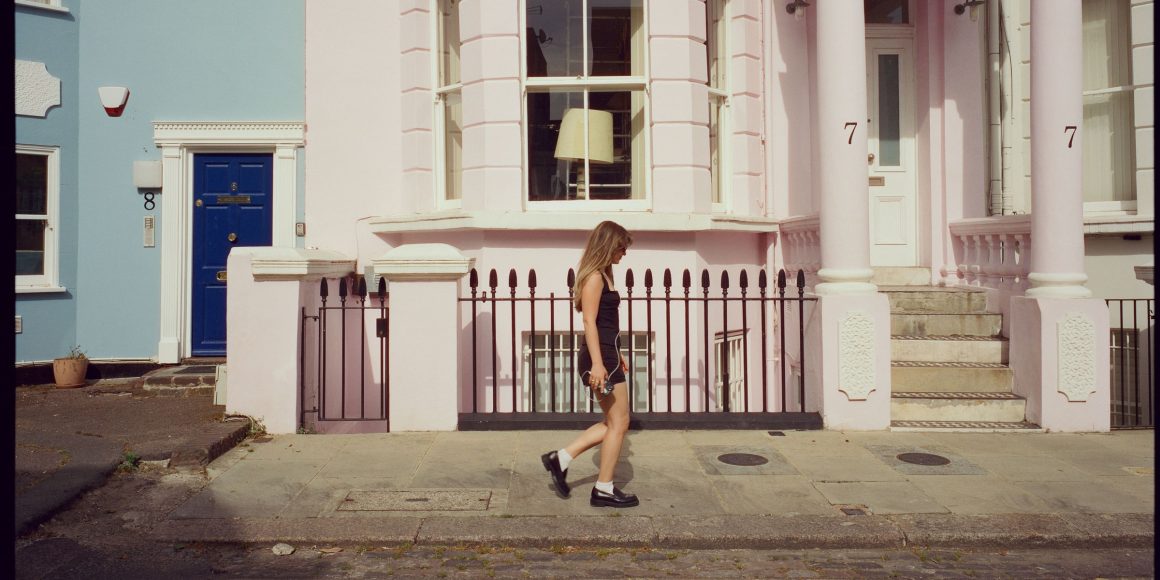


























Elizabeth Perran is making a strong first impression with February, a nine-track debut that blends intimate songwriting with atmospheric production and a serious appetite for experimentation. The album has a cinematic feel from the outset, moving through lonely streets, trains, rooms and memories while exploring themes of ageing, identity, isolation and resilience. Yet despite the weight of those subjects, Perran never lets the record become overly sombre. There is warmth in the production and plenty of movement in the arrangements, creating a balance between darkness and light that makes the album feel immersive rather than heavy.
The sonic palette is one of February’s biggest strengths. Perran combines the intimacy of British folk with touches of art rock, experimental music and orchestral songwriting, while analogue synthesizers provide a warm backdrop across the record. Piano, guitars, Mellotron, saxophone and woodwinds all play important roles, giving each track its own personality while maintaining a cohesive sound. “I Remember Rain” immediately establishes the album’s atmospheric edge, while “Reeds” brings together piano, electric guitar, keyboards and saxophone in a beautifully tense arrangement. There is an impressive level of detail here, but the production never loses sight of the songs themselves.
“Old Woman Against the Winter” is one of the record’s emotional highlights. Built around piano and Mellotron, the track tells a story of ageing and loss while keeping its central character strong and dignified. Perran’s vocal performance is especially effective because she knows when to hold back. Rather than pushing the emotion too hard, she lets the lyrics carry the weight. “Peregrine Man” takes a more mysterious route, using restrained woodwinds and unexpected harmonies to create a dreamy, almost timeless atmosphere. Meanwhile, “Sell Me an Old Man” shows just how much Perran can communicate through small details, building a vivid portrait without over-explaining it.
The album gets stranger as it moves forward, and that is where Perran’s adventurous side really comes through. “Summer” steps away from traditional song structure and feels closer to a cinematic soundscape, while “Dark, Dark, Dark” uses repetitive vocals and layered harmonies to create an eerie, hypnotic mood. It is one of the album’s most intense moments, especially as memories of the past collide with images of a changing city. “On the East Side Again” brings some welcome melodic immediacy, showing that Perran can deliver a more direct song without sacrificing the atmosphere that defines the album.
By the time “Pillars and Tile” arrives, the album has built a world that feels both strange and familiar. Its imagery of trains, machinery, shadows and the city waking at dawn makes for an evocative final scene, while the unresolved ending leaves plenty to sit with after the music stops. February is an ambitious debut, but its ambition never feels forced. Elizabeth Perran has a distinctive voice, a strong visual imagination and an obvious instinct for unusual arrangements. More than anything, she sounds like an artist already confident in her own direction. February is a compelling first chapter, and one that suggests there is plenty more to come.
Spotify, Instagram, Website | PR: Danielle Holian, Decent Music PR
Related Stories

Inside Kevin Anglade’s THE BLACK BOX: Music, Identity and Resistance
Kevin Anglade explores social expectations and systemic oppression on THE BLACK BOX, connecting a 14-track album with BRANDED...
JUILS left Nashville for London and wrote the words she almost said
On her second EP 'What I Meant to Say', the Boston-born, London-based songwriter turns her first year in...

‘Skeletor Bag’ Brings mars kumari, Del the Funky Homosapien and an Underground Cast Together
Inside Skeletor Bag, the seven-track collaboration from mars kumari and Del the Funky Homosapien featuring Jel, doseone, Fatboi...