





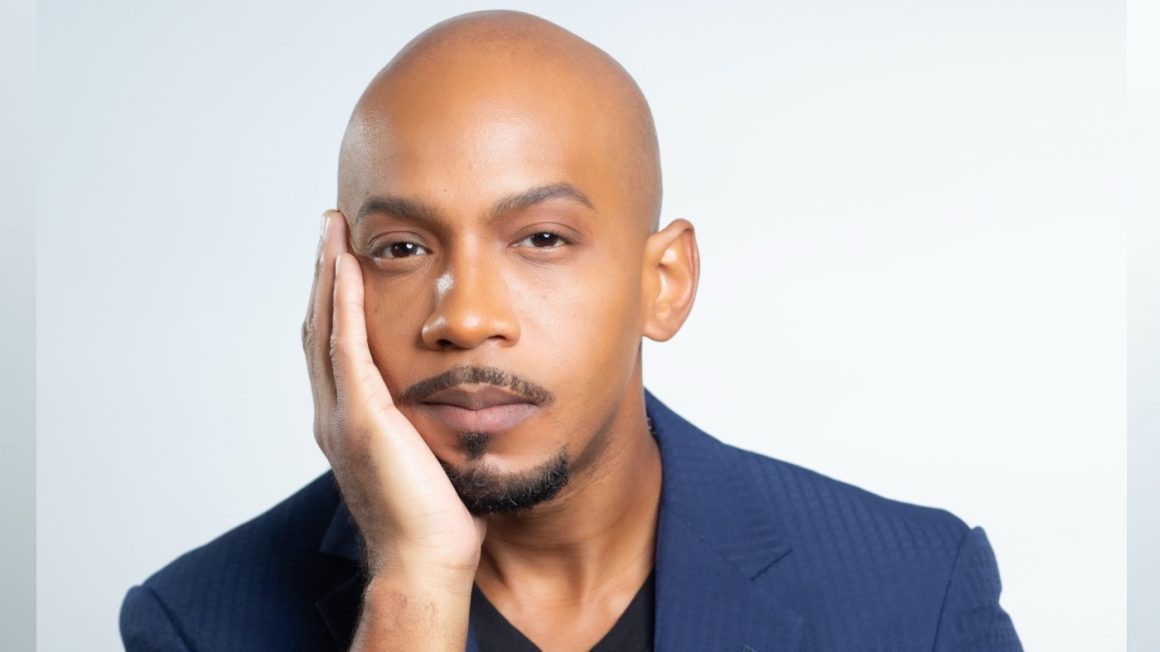
































BROOKLYN, N.Y. — Thavius Beck has spent much of his life moving between worlds.
He has been a rapper, producer, multi-instrumentalist, mixing engineer, music director and educator. He emerged from Los Angeles’ underground hip-hop community, became part of the city’s influential beat scene, toured internationally, worked alongside artists across multiple genres and eventually brought his production knowledge into the classroom.
Through all of those chapters, experimentation has remained the constant.
Now 47, Beck is channeling that history into “4 Sevens,” a seven-track project released July 31, his 47th birthday. Created entirely by Beck, the record serves as a personal reflection on nearly five decades of life and an artistic career built around refusing to fit neatly into a category.
There are no guest vocalists or outside producers carrying the project. Beck produced, rapped, mixed and mastered the record himself. He even created its artwork, making “4 Sevens” a complete expression of his own creative perspective.
For an artist whose career has been defined by versatility, that independence feels fitting.
From Minneapolis to the Los Angeles Underground
Born in Minneapolis, Beck’s musical education began long before electronic production became his primary language. He grew up playing alto and tenor saxophone and bass guitar before discovering samplers and sequencers at 12.
At 16, he moved to Los Angeles, where his relationship with music quickly became something larger than a childhood interest.
Beck began releasing solo projects under the name Adlib and helped form Global Phlowtations, a hip-hop collective that became part of Los Angeles’ underground scene. As the city’s musical landscape evolved, Beck evolved with it.
That journey eventually placed him within the community surrounding Low End Theory, the influential Los Angeles club night that became an important meeting ground for experimental beatmakers, producers and artists.
Beck was there early. He appeared on the first Low End Theory flyer and would go on to perform at the event at least 10 times.
The club eventually became known far beyond the local producer community, attracting appearances from major artists while maintaining its identity as a place where beatmakers could test new sounds and challenge one another creatively.
For Beck, it was another chapter in a career that had already been built from experimentation.
Building a Career Without a Blueprint
In 2003, Beck signed with independent label Mush Records and began expanding his reach through releases including “Decomposition,” “THRU” and “Dialogue,” along with several solo EPs.
Touring followed.
His music took him across the United States, Europe and Brazil, with a performance in Moscow adding another unexpected stop to an increasingly international career.
At the same time, Beck became a collaborator whose production abilities could move comfortably between musical worlds.
His career includes production and official remix work connected to Saul Williams, Zack de la Rocha, Nas, Trent Reznor, Cedric Bixler-Zavala of The Mars Volta, Ras Kass and Skylar Grey. He has also worked as music director for Williams and Grey, effectively operating as a one-man band in a role requiring both technical precision and musical adaptability.
His experience eventually extended beyond records and concerts. Beck scored the feature film “Suicide Girls Must Die” and has placed music in commercial projects, opening another avenue for his electronic production work.
But one of the most significant chapters of Beck’s career developed not onstage, but in the classroom.
Turning Experience Into Education
For approximately 15 years, Beck has taught electronic music production through courses, workshops and tutorials.
He became an Ableton Certified Trainer in 2009 and a Bitwig Certified Trainer in 2015, allowing him to turn years of experimentation into practical knowledge for other musicians and producers.
That path eventually led Beck to BerkleeNYC, where he became its first full-time professor and taught for five years.
Teaching did not replace his identity as an artist. Instead, it became another extension of it.
Beck describes himself as an “electronic musician,” a deliberately broad title for someone whose work can involve rapping on one project, programming electronic production on another, playing instruments, mixing records or directing a live performance.
His music reflects that same resistance to easy categorization, pulling disparate genres and ideas together around bass-heavy production and an emotional core.
Finding Creativity in Uncertainty
Behind the accomplishments is a less visible balancing act.
Beck has been a parent for nearly 30 years, and his youngest child is now 13. Building an independent creative career while remaining a provider has meant continually confronting the tension between artistic freedom and financial stability.
For Beck, that tension eventually became a source of perspective.
His years working as a full-time salaried professor showed him that the unpredictability of independent creative work was not necessarily something he wanted to escape.
The need to generate opportunities, pursue new goals and continually find another path forward had become part of what kept him engaged.
Rather than fearing uncertainty, Beck began viewing it as fertile ground for creativity.
Stability can offer comfort. But for an artist who has spent decades reinventing himself, too much comfort can also become stagnation.
Beck has no interest in becoming stagnant.
‘4 Sevens’ Brings the Story Full Circle
That makes “4 Sevens” more than another entry in Beck’s catalog.
Its seven songs arrive after a lifetime of accumulating skills, experiences and perspectives across different corners of the music industry. The record is personal because Beck’s fingerprints are on virtually every component of it.
The significance of releasing it on his 47th birthday is intentional.
“4 Sevens” looks backward without suggesting Beck is finished moving forward.
His next chapter could extend well beyond conventional album releases. Beck has developed an increasing interest in shooting and editing video and hopes to combine original visual work with his music on future projects.
He also wants to continue producing for artists willing to take creative risks, particularly those with something meaningful to communicate. Film scoring, licensing and other intersections between music and visual media remain areas he intends to pursue further.
And after years spent teaching, performing and directing music, Beck remains available for opportunities that take advantage of the unusual breadth of his experience.
That may ultimately be the clearest way to understand “4 Sevens.”
It is not an attempt to introduce a new version of Thavius Beck. It is a record that brings together the versions that have already existed — the 12-year-old discovering samplers and sequencers, the teenager entering the Los Angeles underground, the beatmaker performing at Low End Theory, the touring electronic musician, the collaborator, the music director, the professor, the father and the independent artist still searching for the next creative challenge.
At 47, Beck isn’t treating his history as a finished story.
He is using it as raw material for whatever comes next.
Related Stories
From the Garage to Clean Paper: Taj Jacobs Builds His World as The Rapping Detailer
On Clean Paper, Taj Jacobs brings his life as The Rapping Detailer into focus, connecting automotive craftsmanship, independent...

Whimsy and the Bee Announce New Album ‘HISTORY’
Whimsy and the Bee Announce New Album ‘HISTORY’ LISTEN HERE | History Whimsy and the Bee’s History feels...

AKTHECHRISTIANRAPPER and 1K Pson Deliver a Powerful Reminder to Stay In Your Purpose With “Get The Belt”
AKTHECHRISTIANRAPPER is turning a personal struggle with purpose into a message for anyone who has ever questioned whether...