







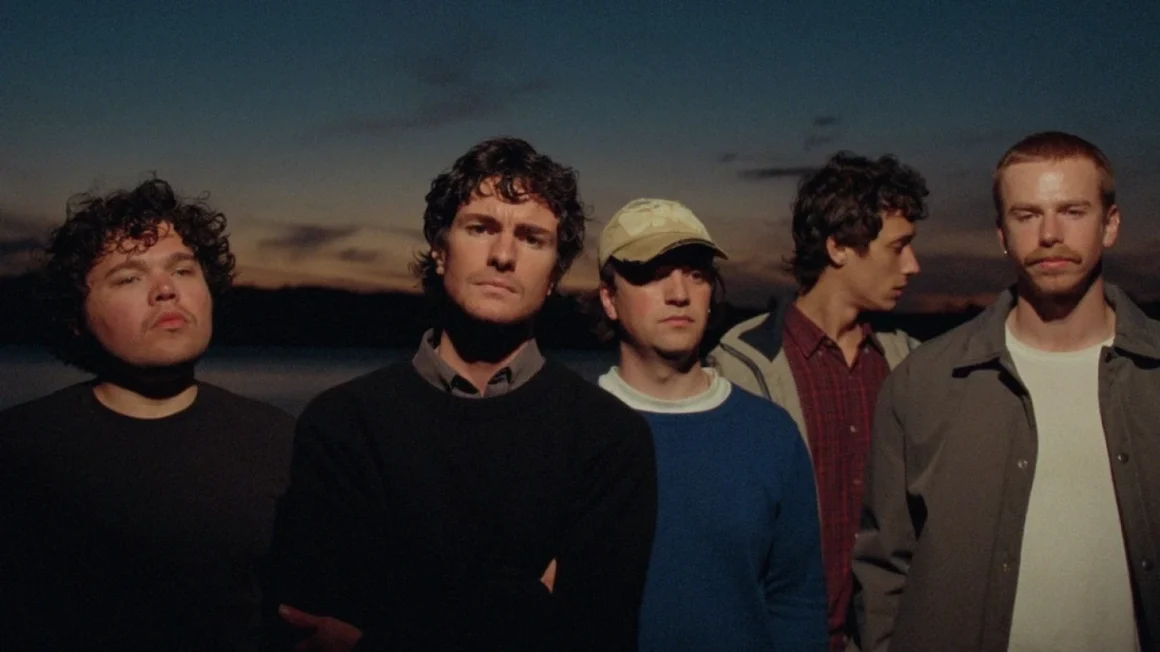































Albany rock trio The Perfect Storm pair a driving guitar arrangement and a surreal music video with an openly Christian message on “The Guide.”
By Andrew Gill
There is something inherently compelling about a rock song that acknowledges the uncertainty of human existence without surrendering to despair. On “The Guide,” The Perfect Storm confront the uncomfortable realization that we don’t have all the answers ourselves. Taken from their forthcoming second album, Nature’s Fury, the single finds James Krakat, Ethan Lynch, and Matty Kirtoglou exploring the relationship between personal struggle and spiritual direction.
The song begins in emotional turmoil. Angry days and dizzy nights establish a narrator burdened by frustration, poor decisions, and the consequences of misplaced confidence. These aren’t elaborate lyrical images, but their simplicity serves a purpose: the band is examining how easily stubbornness can turn ordinary difficulties into seemingly insurmountable obstacles.
There’s a difference between being lost and believing you’re lost forever. In the chorus, the band identifies Jesus Christ as the guiding presence, making its conviction plain. The circumstances behind that conviction remain recognizable regardless of the listener’s beliefs, especially to anyone who has found that even well-intentioned advice can deepen confusion.

The directness carries through to the music. A driving rock arrangement gives the vocal room to tell the story, and an expressive guitar solo offers a moment of release that the lyrics alone can’t provide. It recalls an enduring quality of classic melodic rock: the guitar can carry an emotion beyond the limits of language.
The official music video takes the navigation metaphor literally, sending a pirate ship through a neon-lit futuristic city. It’s a surreal pairing with a point: the skyline represents technological advancement, while the ship still needs to find its way. The ability to build more sophisticated tools doesn’t automatically make us wiser about where we’re going.
That creative confidence follows the trio’s debut, Maiden Voyage, and multiple No. 1 placements on the National Radio Hits charts. “The Guide” isn’t without limitations: the lyrics sometimes rely on broad emotions rather than specific experiences. Listeners who prefer ambiguity may find the spiritual conclusion unusually direct, but the band doesn’t disguise its convictions beneath irony, and the performance is stronger for it.
Ultimately, “The Guide” succeeds because it doesn’t treat vulnerability and strength as opposites. Acknowledging confusion can be the first step toward clarity, just as accepting help can take courage. The trio’s reminder is simple: knowing where you want to go means little if you’ve forgotten how to find your way.
Related Stories

Cathleen Ireland Turns Family Memory Into an Anthem on “How American Is That?”
Co-written with her 98-year-old father, Cathleen Ireland’s acoustic single ties family memories to some of the most recognizable...

Awning Introduces Its Debut Album With ‘I’m Up’
Auckland band Awning has announced its debut album for January 29, 2027, with new single “I’m Up” leading...

MUNA Opens ‘Dancing On The Wall’ to Romy, Arlo Parks and More
MUNA’s Dancing On The Wall deluxe edition adds four remixes from Avalon Emerson, Romy, Arlo Parks and Porches.