

































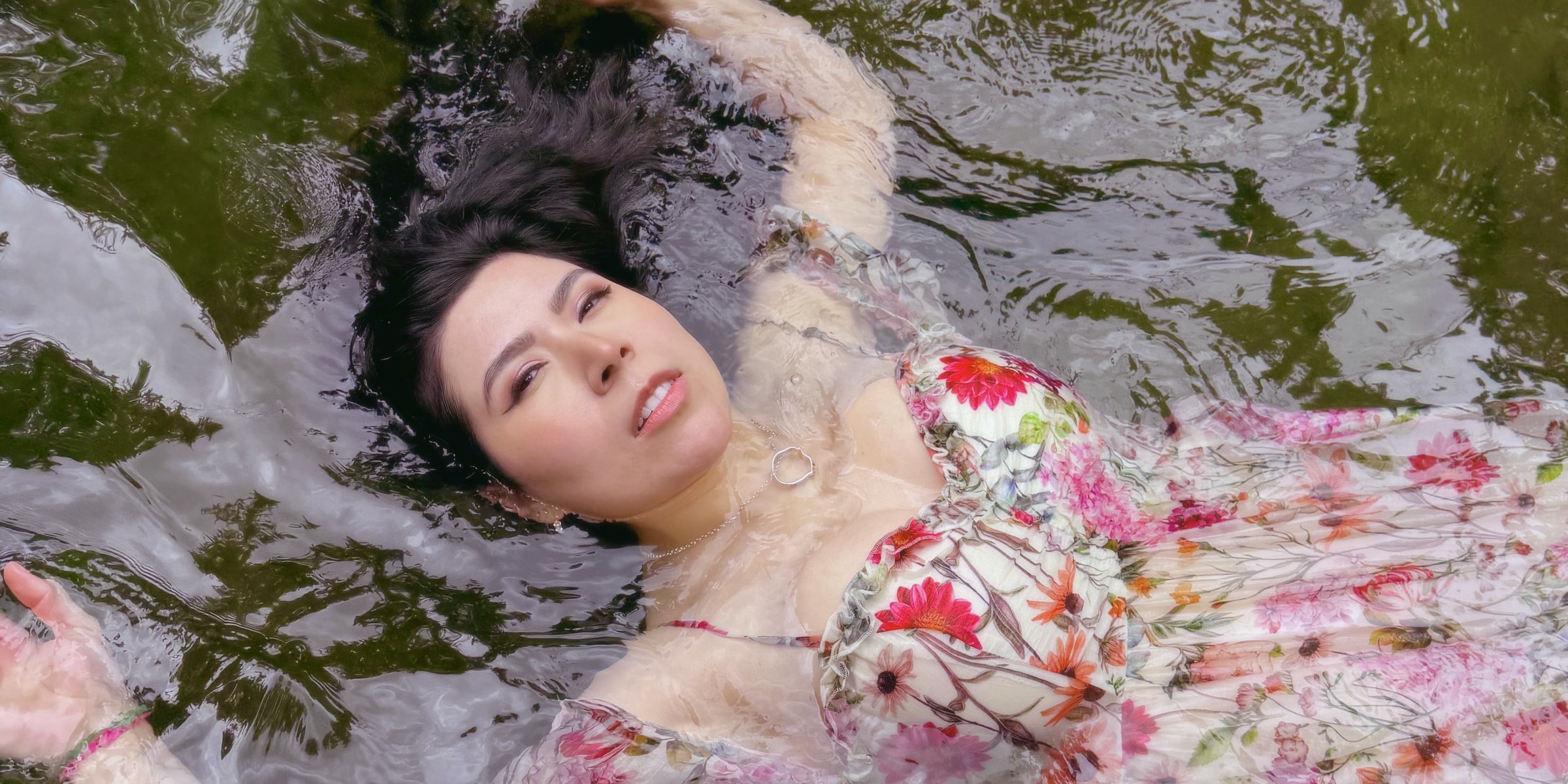
Look at the back of Green Aventurine before you press play. It opens on Saltwater Waves and closes on Desert Blooms, and the 16 titles in between cover a lot of ground. You start at the sea, all motion and salt, and you end somewhere dry where something has nonetheless found a way to flower. That is a long journey for an album to make, and the honest thing about it is that the far end is no kind of arrival. A desert in bloom is still a desert. Melody Briar, a songwriter who grew up in Michigan and now lives in Massachusetts, has made a record about grief that will not pretend the story finishes, and the tracklist tells you so before a note has sounded.
Green Aventurine is out on 6 November. It is long and it is heavy, and if you are weighing whether to give it an evening, I would say yes, and give it the whole evening. This is an album that wants to be heard in order.
Grief here comes in all its forms, and the record lets each of them have its room. There is sadness, plainly, but there is anger too, and tenderness, and guilt, and a nostalgia that keeps pulling toward particular places and particular days. Read the titles in sequence and you can feel the album refusing the tidy shape that so many records about loss settle into, where the early songs hurt and the late songs heal. We’re Fading sits near the start. 49 Days arrives just before the middle, a title that counts time the way people do when time has stopped making sense. Folding Into Myself comes late, deep in the second half, long after any conventional album would have begun to lift its head. Replaced sits a few tracks before the end. Even the last stretch, with Our University leaning back into memory before Desert Blooms, looks over its shoulder as much as it looks forward.
Then there is Dear Arthur, the eleventh track, a title written as the opening of a letter. It is the most direct address on the album and it says a great deal about the record’s manner: this is grief spoken to someone, not merely about them. Bowie Days, just before it, has the feel of a memory given a name of its own, a period of a life marked by what was playing.
Places recur. The fifth title is Mill Pond Park, and the same park turns up again in the lyric of Bellingham, the thirteenth track, where Briar sings "If I had it my way / We’d sit together at Mill Pond Park / Among cattails and ducks". So a song title from early in the running order returns eight tracks later inside another song, which is precisely how memory behaves when you are grieving. A place you thought you had dealt with comes back, unbidden, in the middle of something else. The album is built to let that happen.
The Intangible Man, the earlier single, sits at number seven, right at the heart of the record. It is the song that first drew attention her way, picking up radio play and coverage from places like EARMILK and Atwood Magazine, and hearing it in its proper home makes sense of it. Its title fits the album’s central ache: someone who is present in every thought and nowhere you can touch.
The sound is built on piano. Briar plays it and sings, and the songs are led from the keys, with atmospheric production gathering everything around them and layered instrumentation filling out the space. The notes call the result both ethereal and grounded, and that pairing is the right one to hold on to. The air in these arrangements never floats free of the weight underneath. The band she assembled in New York gives her a wide palette: cello and violin, flute and saxophone from a single player, acoustic and electric guitars, bass, and two drummers sharing the kit across the record. That is a generous set of colours for a singer and pianist, and it lets an album about one subject move between moods without losing its centre. She describes her music as Alternative, Indie Pop, Indie Rock and Singer/Songwriter, and the breadth of those tags is earned by the breadth of the players.
Her own reference points are worth taking seriously, because each one points to something real in what she is after. Phoebe Bridgers is the obvious kinship: a songwriter who made grief and its awkward afterlife into songs that feel like overheard thought, frank about the dark and quietly funny about it, never sentimental. Lana Del Rey brings something different, a sense of place as mythology, roads and towns and coastlines carrying emotional weight far beyond their size, all of it wrapped in a slow, cinematic melancholy. That instinct for place is all over Green Aventurine’s tracklist. Caroline Polachek offers the ethereal side, the willingness to let a voice and an arrangement drift upward into something strange and luminous while the song keeps its shape. And The Cranberries are the grounding name in the set, a band whose records paired real atmosphere with directness and force, songs that could be dreamy and furious within the same album. Put those four together and you get a fair map of the territory: confessional writing, landscape as feeling, a reach toward the airy, and enough heft underneath to keep it from blowing away. What Briar adds is her own philosophical inwardness, a record that sits with the questions loss raises about memory and identity and time rather than rushing to answer them.
She has said music was "my only chance at self-soothing", and you can hear the album as that, a place she built to put things that had nowhere else to go. But it was clearly made to be shared, too. The point of laying sadness next to anger, and guilt next to tenderness, across 16 songs, is to tell anyone in the middle of their own loss that the confusion is normal, that the feelings do not queue politely, that a park can ambush you eight songs after you thought you had left it.
Green Aventurine is a debut album that takes its subject at full length and full seriousness. Begin with Saltwater Waves, let it run, and see where the desert leaves you.
Spotify | Instagram | TikTok | YouTube | X
PR: Decent Music PR
Related Stories

Ramirez Explains the Luxury Inspiration Behind New EP ‘Brabus & Lorinsers’
Ramirez (@ramirez_187) is a San Francisco rapper who puts depth and meaning into everything he creates. He recently...
Kelsey Feral read her ex’s 30 philosophy books to write her breakup album
Kelsey Feral turns an unwashed bedsheet saga into ‘Pillowcase’, a darkly funny pop single about excuses, hindsight and...

Dark God and Azim The Beast Build a Horror-Inspired World on There Must Be Blood
Some projects establish their identity through storytelling, while others make their intentions clear through atmosphere and imagery. There...