






















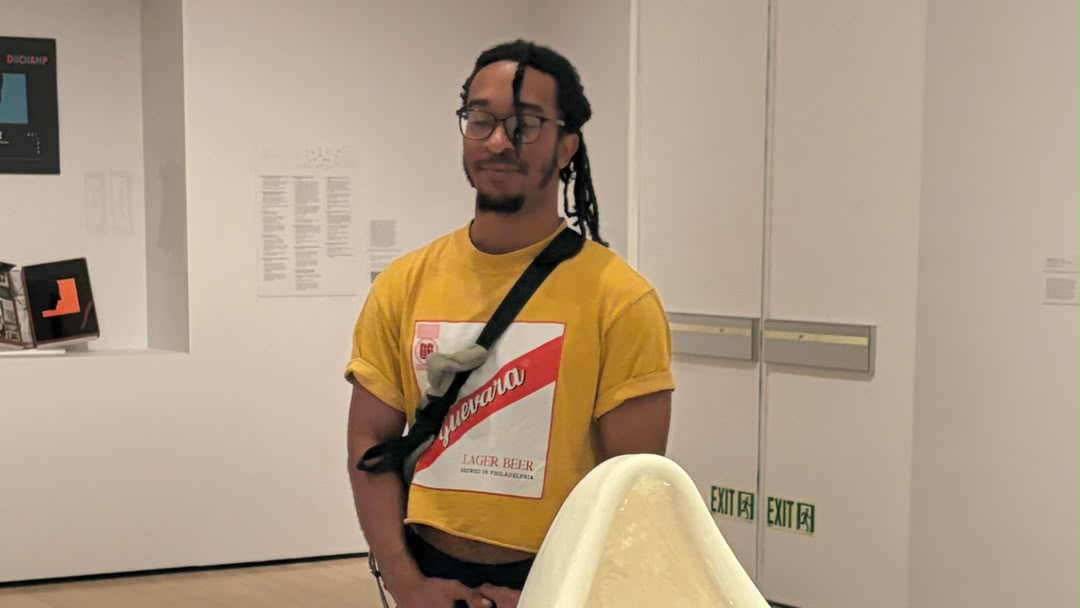
















There are albums designed to entertain you for half an hour, and then there are albums that feel like someone has opened the door to their mind and invited you inside. Cello’s Singing to Serpents belongs firmly in the second category.
Across nine tracks, the Pittsburgh-based artist delivers an intensely personal collection built around love, desire, insecurity, faith, frustration and the ongoing battle to understand yourself when your emotions refuse to cooperate. Cello doesn’t hide the uncomfortable parts. In fact, those are often where Singing to Serpents becomes most compelling.
The album begins with “Stay Here,” an emotionally charged introduction that turns romantic longing into something considerably more complicated. What starts as a plea for connection gradually reveals fear, fixation and vulnerability. Cello uses repetition effectively, allowing certain thoughts to circle until listeners experience the emotional obsession rather than simply hearing about it.
That restless quality follows him into “Elevate,” where confidence and ambition take center stage. But even when Cello sounds triumphant, uncertainty remains somewhere underneath. He understands that confidence and insecurity frequently occupy the same person—and sometimes the same moment.
“Sucks to Be Used” pushes into darker territory, confronting betrayal and resentment without cleaning up the emotions for easy consumption. Cello isn’t trying to make himself the flawless hero of every song. His willingness to expose anger, contradictions and emotional mistakes gives the album its authenticity.
Tracks including “Full Moon,” “So Long” and “Cravings” expand that emotional universe. Desire becomes intoxicating but dangerous, while relationships appear capable of providing comfort and chaos in equal measure. Musically, Cello moves between alternative pop, hip-hop-influenced phrasing, atmospheric production and confessional singer-songwriter territory without becoming trapped inside one genre.
That unpredictability fits him.
Cello is autistic and has ADHD, and his neurodivergence provides additional context for the intensity and unconventional emotional movement throughout Singing to Serpents. Repetition can feel like fixation; sudden shifts resemble thoughts colliding in real time. Yet the album never needs to be reduced to autism or ADHD. Cello’s experiences inform his artistic perspective without defining its limits.
His growing commitment to autism advocacy makes that openness particularly meaningful. Cello is working toward his goal of becoming a certified peer support professional in the autism field, hoping to eventually use his lived experience to help others. That gives the vulnerability within his music an additional sense of purpose.
Then Singing to Serpents turns toward spirituality.
“Pray” and “Faith” don’t offer convenient religious answers. Instead, Cello approaches belief as another complicated relationship. Faith isn’t presented as certainty; it becomes the decision to keep reaching when certainty isn’t available.
Closing track “Sleeping” finally lets the record exhale.
By then, the meaning behind Singing to Serpents feels clear. The serpents could be desire, anxiety, ego, loneliness, doubt or temptation. Cello doesn’t claim to have defeated them.
He does something arguably more interesting.
He gives them a voice—and then answers them with his own.
Singing to Serpents is messy, introspective and deeply human. Rather than presenting the polished image of an artist who has everything figured out, Cello captures what it sounds like to still be figuring it out.
And that’s exactly why it’s worth hearing.
https://linktr.ee/Musicbycello
Related Stories

Mik Ivy Blends Nostalgia, Romance and Restless Energy on “Angel Dust”
Some songs are made to tell a story. Others are made to make you feel like you were...
“Senescence”: Sophierce Releases New Single
There are songs that ask us to dance, and there are songs that ask us to look inward....
“Not a Want”: Lily McMahon Reveals New Single
There is a particular vulnerability in discovering that love does not have to hurt in the ways you...