
















Co-written with her 98-year-old father, the Pittsburgh singer-songwriter’s patriotic anthem turns cherished American memories into a celebration of courage, unity, and the enduring power of family.
By Cameron Mitchell
Country music has always understood something that the rest of popular culture occasionally forgets: The stories we inherit can be just as important as the stories we live. Whether passed down around a kitchen table, remembered through an old photograph, or preserved in a song, those narratives become the foundation of how we understand ourselves. On her latest single, “How American Is That?”, Pittsburgh singer-songwriter Cathleen Ireland takes that tradition seriously, crafting a patriotic tribute whose greatest strength isn’t its celebration of American history, but the profoundly personal circumstances that inspired it.
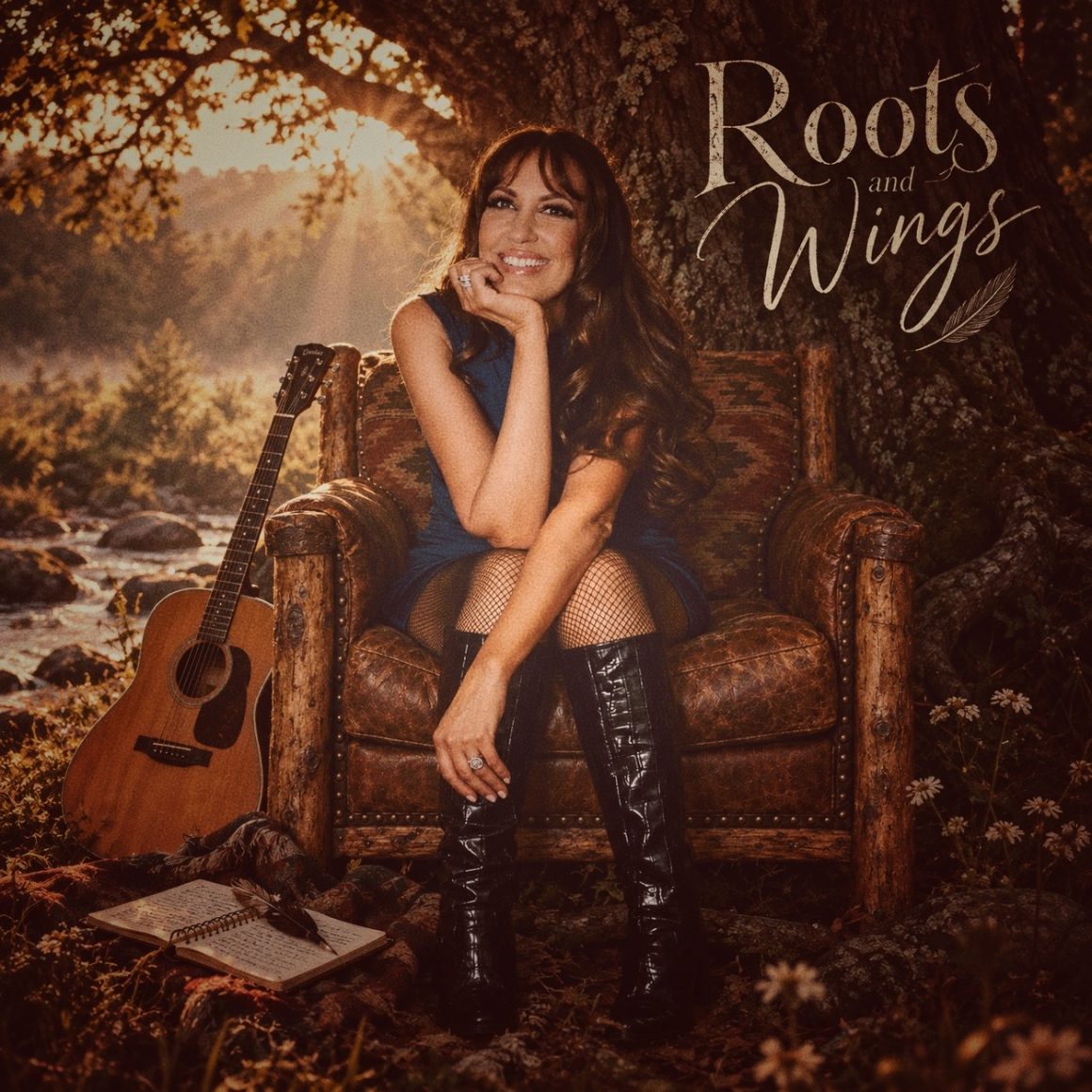
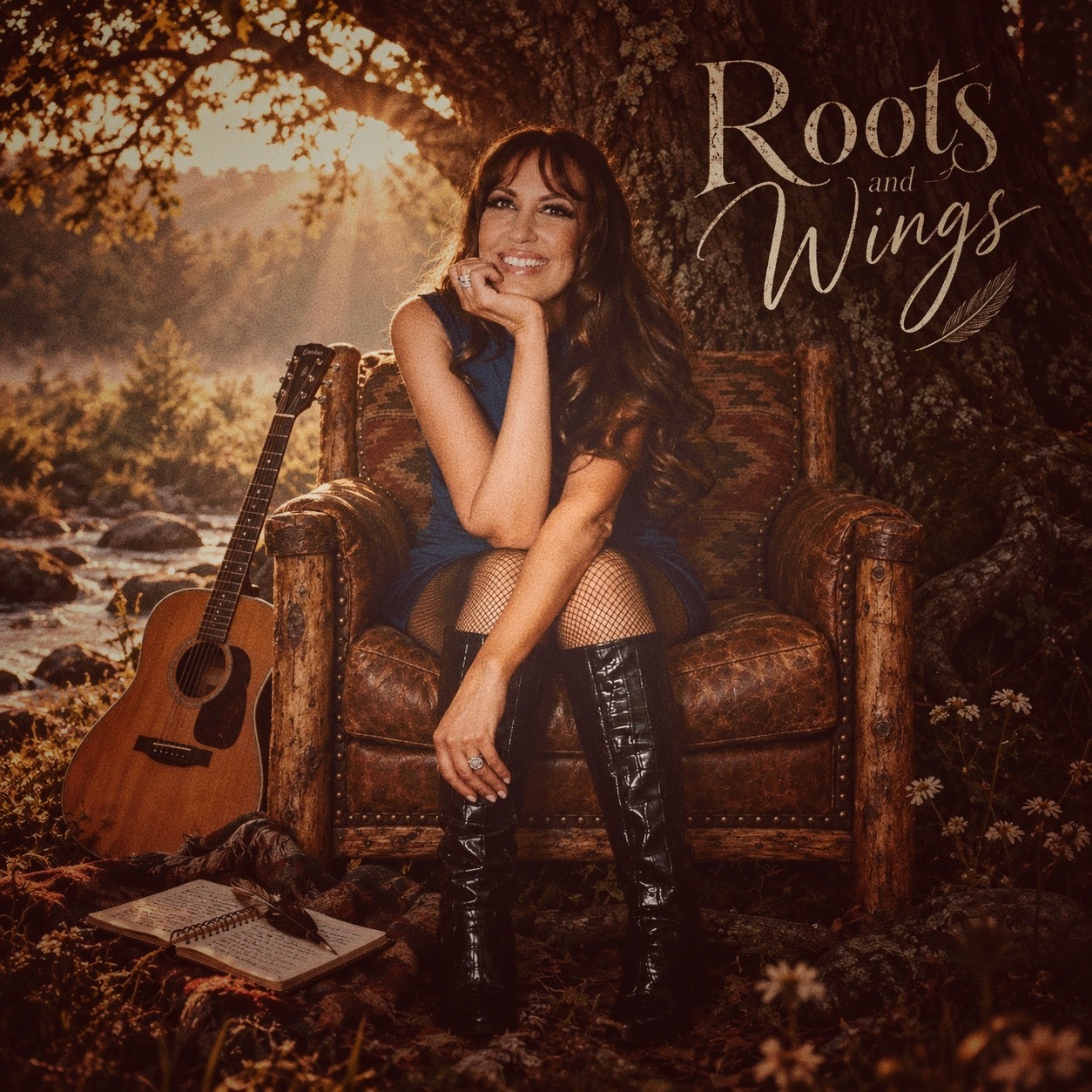
The song, released November 6 alongside Ireland’s acoustic album Roots & Wings, was conceived by her 98-year-old father during sleepless nights following the death of his wife. As he reflected on memorable moments from nearly a century of American life, he began assembling the ideas that would eventually become the song’s foundation. Ireland helped transform those memories into lyrics, contributing the bridge and shaping the composition alongside her father. That backstory matters enormously. Without it, “How American Is That?” might register as another well-intentioned patriotic anthem. With it, the song becomes something richer: an intergenerational conversation about national identity, personal memory, and the people whose extraordinary actions define America’s possibilities.
The historical references arrive like photographs pulled from a family album. Neil Armstrong and Buzz Aldrin’s moon landing represents technological ambition and the country’s willingness to pursue seemingly impossible dreams. Ira Hayes, the Native American Marine immortalized in the Iwo Jima flag-raising photograph, symbolizes sacrifice and military service. Young John F. Kennedy Jr. saluting his father’s casket introduces a profoundly different emotion, capturing national mourning through the innocent gesture of a child. These moments aren’t connected by a conventional narrative. Instead, Ireland treats them as emotional landmarks, trusting listeners to recognize their significance. That approach is particularly effective within the traditions of country and Americana songwriting, where a familiar name or carefully chosen image can communicate generations of collective experience.
The song’s bridge broadens its perspective considerably. Captain Chesley “Sully” Sullenberger, polio vaccine pioneer Jonas Salk, HIV/AIDS researcher Dr. David Ho, Rosa Parks, and Martin Luther King Jr. all receive recognition. Their inclusion expands the definition of American heroism beyond military achievement or political leadership. There’s something admirable about a patriotic song that places medical researchers and civil rights activists alongside astronauts and military personnel. It suggests that national greatness isn’t confined to battlefield victories or symbolic gestures. Sometimes it emerges through scientific persistence, moral courage, and the decision to challenge injustice.
Ireland’s recurring chorus, built around the question “How American Is That?”, provides the song with its most immediately accessible element. It’s straightforward, celebratory, and intentionally designed to invite participation. The refrain doesn’t pursue lyrical ambiguity or contemporary pop sophistication. Instead, it embraces the direct emotional language that has long connected patriotic country music with audiences seeking affirmation and shared experience. That simplicity is both the composition’s defining strength and its artistic limitation. Listeners seeking a complicated examination of American history won’t necessarily find one here. The song favors inspiration over confrontation, emphasizing moments of collective pride rather than exploring every contradiction surrounding them.
Yet those contradictions exist within the very figures Ireland celebrates. Rosa Parks and Martin Luther King Jr. challenged a nation that routinely denied Black Americans fundamental rights. Ira Hayes represented a country whose treatment of Native Americans frequently contradicted its professed ideals. Their presence gives the song greater interpretive possibilities than its uncomplicated chorus might initially suggest.
Ultimately, what makes “How American Is That?” compelling is its sincerity. Ireland and her father weren’t attempting to score political points. According to the songwriter, they deliberately selected historical moments they associated with greater national unity, hoping their collaboration might encourage listeners to rediscover common ground. The song’s acoustic approach complements that intention, placing emphasis on storytelling rather than unnecessary musical spectacle. Its accompanying nostalgic lyric video, directed by Michael Stover, reinforces the sense of history as something both personal and collective. But the most affecting detail remains Ireland’s revelation that her father still cries whenever he hears their finished composition. That’s the kind of emotional truth no production technique can manufacture. For an artist whose career has moved through rock, pop, R&B, and adult contemporary music, “How American Is That?” represents a return to one of songwriting’s oldest purposes: preserving the stories that matter before they’re forgotten. It may not redefine patriotic music, but it offers something worthwhile within the genre: a reminder that America is more than a political argument or a collection of symbols. It’s also a nation of families, memories, achievements, disappointments, and people continually working toward something better. And perhaps the song’s most American image isn’t an astronaut on the moon or a flag rising over Iwo Jima. Maybe it’s a 98-year-old father, sitting with his daughter, turning a lifetime of memories into music.
Rating: 4.5 out of 5 stars
Related Stories
Awning Introduces Its Debut Album With ‘I’m Up’
Auckland band Awning has announced its debut album for January 29, 2027, with new single “I’m Up” leading...
MUNA Opens ‘Dancing On The Wall’ to Romy, Arlo Parks and More
MUNA’s Dancing On The Wall deluxe edition adds four remixes from Avalon Emerson, Romy, Arlo Parks and Porches.

Saw Tooth Wave Finds a New Audience With ‘Never Leave Your Side’
The 2025 single is a starting point for listeners discovering Cris Cordero’s self-recorded indie rock. His team says...