







































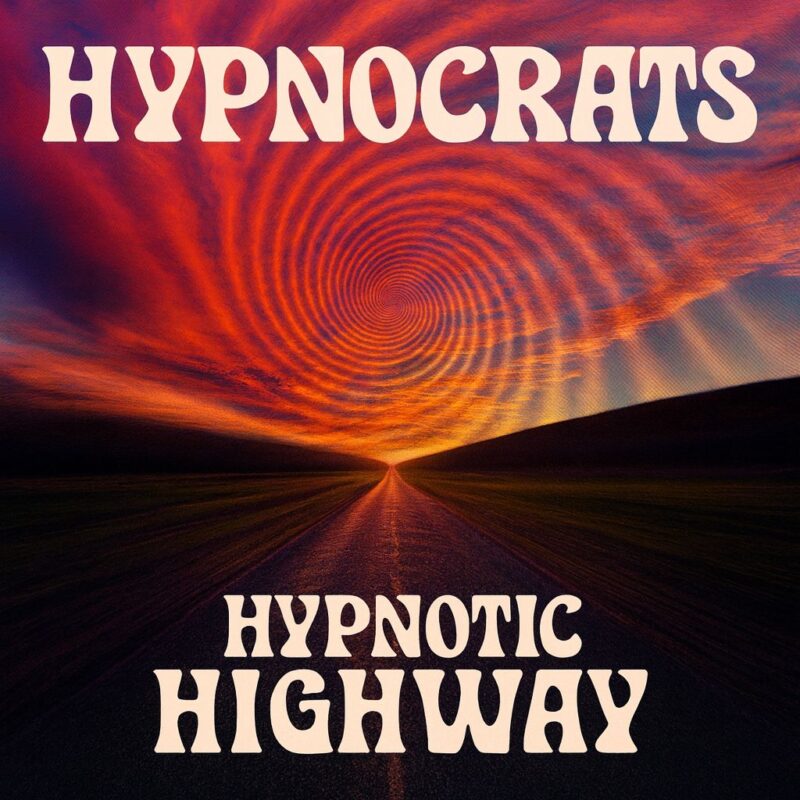
Hypnocrats’ Hypnotic Highway started with a chance meeting that quickly turned into a full creative collision. SERay met vocalist Jay Ashton at a party in 2025, where a simple conversation about unfinished musical ambitions led to an unexpected offer: a studio session, no strings attached. Ashton arrived with years of cover band experience and a notebook full of ideas, but the direction of the project shifted almost immediately once the two started building from scratch.
One early idea, “Hedonic Adaptation,” became the spark that shaped the entire record. Instead of relying on familiar structures, SERay and Ashton rebuilt the song from the ground up, with Ashton focusing on vocal concepts and SERay translating those ideas into melody and arrangement. What began as experimentation quickly turned into a shared creative language, pushing them toward a sound they would later describe as psychedelic blues, a blend rooted in tradition but warped through modern texture and tone.
That sonic identity defines the album. Hypnotic Highway leans into classic blues storytelling but refuses to stay in one emotional lane. Some tracks carry weight and tension, others shift into brighter, almost playful moments, including humor and irony that break the genre’s usual seriousness. The result is a record that feels like movement rather than repetition, less a revival of blues and more a reimagining of what it can be.
At the center of the project is “Hedonic Adaptation,” a track inspired by the psychological idea that people eventually return to a baseline of happiness after emotional extremes. That concept becomes more than lyrical inspiration, it shapes the music itself. Recorded in just a couple of days, the song grew through rapid collaboration, with SERay handling instrumentation and Ashton delivering vocals that pushed far beyond his usual range. One final vocal take, described in the studio as almost unreal in its intensity, became the defining moment of the track.
The album’s chemistry however extends beyond the core duo. Vocalist Cate Cooper also contributed standout performances on several tracks, bringing remarkable skill and depth to the record. Cooper had previously sung alongside Ashton during their cover band years, and it was Ashton himself who recommended bringing her into the sessions. The decision proved invaluable, adding another layer of emotion and texture that elevated the album’s dynamic range and strengthened its collaborative spirit.
That collaboration is ultimately what gives Hypnocrats their edge. There is a rawness in how quickly ideas were formed and captured, but also a careful sense of control behind the chaos. SERay oversaw recording and production from his own studio, shaping the album’s immersive soundscape, while Ashton provided the emotional and vocal identity that anchors the material. Cooper’s contributions further expanded that balance, helping the project feel larger and more alive without losing its intimacy.
Ultimately, Hypnotic Highway is less about reviving blues and more about bending it into something unpredictable. It is loud, strange at times, emotional in others, and built on a partnership that thrives on instinct rather than overthinking. In a genre often tied to nostalgia, Hypnocrats push forward instead, carving out a space where blues does not look back, it mutates.
Stream Hypnotic Highway and follow Hypnocrats:
https://hypnocrats.hearnow.com/
Related Stories

Rayskii2xx Embraces Growth and Self-Expression on New Single “Worth It”
The journey toward something greater often comes with difficult lessons, personal sacrifices, and moments that test one’s determination....

Joan Greer Finds Hope Through The People’s Anthem
At a time when division often dominates the headlines, singer-songwriter Joan Greer is using music to deliver a...

Fox De La Rose Makes Room for Change on ‘Nothing Is Written In Stone’
Fox De La Rose takes an open-ended approach to songwriting on Nothing Is Written In Stone, a nine-track...