









































Michael Sloan does not start his creative life with a spotlight or a stage. It begins in the quiet of the morning, where he moves directly into making music and visual art with the same steady discipline. Known publicly as a Pulitzer Prize-winning editorial cartoonist and contributor to The New York Times, Sloan also operates on another scale entirely as a musician with more than 300 albums released across streaming platforms.
What makes his output unusual is not just volume, but range. A self-taught multi-instrumentalist, Sloan works across jazz, rock, blues, classical, and world music, with guitar as his primary voice. Every recording is performed and engineered by him, often shaped by what he hears in classical radio broadcasts and vintage recordings that influence his sense of tone and texture. The result is music that feels handcrafted rather than assembled.
There is a tension in his process that defines his work. The challenge is not lack of ideas, but too many of them. With an archive constantly expanding, Sloan has to pace himself carefully, deciding what becomes a finished piece and what stays in motion. That constant overflow has become part of his identity as a creator who never stops producing, but also never stops refining.
Despite winning one of journalism’s highest honors, he speaks about creation with unusual humility. He describes each finished piece as its own reward rather than a milestone. Music and art, for him, function less as achievement and more as release, a daily practice that keeps him grounded rather than elevated.
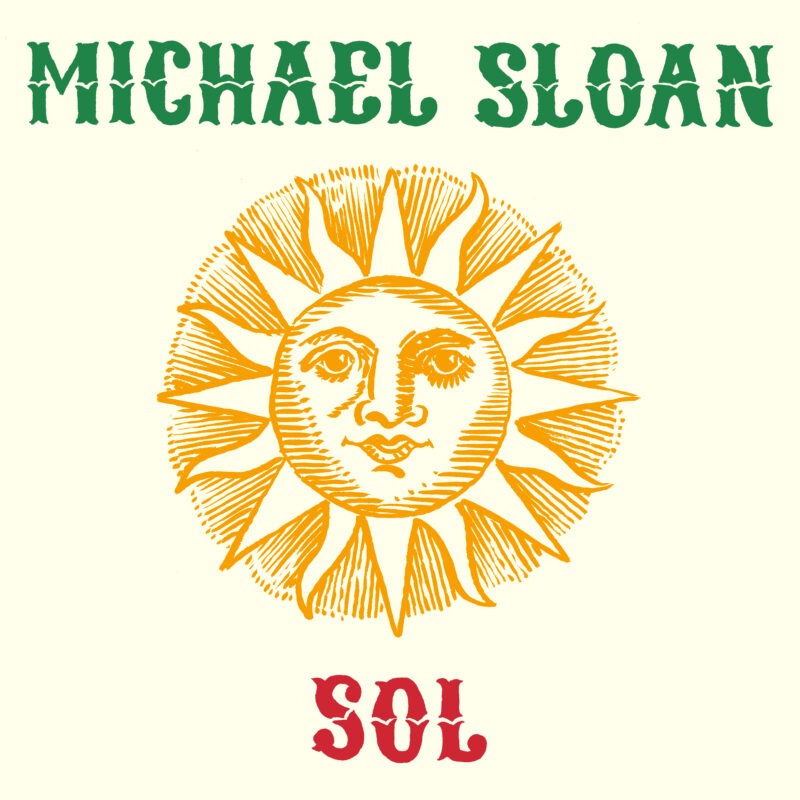
His approach to sharing reflects the same mindset. Sloan distributes his work freely among family, friends, and community, often dedicating albums to people, places, and ideas that shape his perspective. Alongside this generosity runs a deeper thread in his music focused on social justice, civil rights, and human dignity, which appears across multiple projects without ever feeling forced into a single narrative.
Right now, he is working across five separate albums, each exploring a different world. One focuses on civil rights themes, another draws inspiration from artist Juan Miró, while others explore India, a solitary hermit, and the Shetland Islands. Together, they form a fragmented but intentional map of his curiosity, spanning culture, geography, and identity.
Looking ahead, Sloan shows no signs of slowing down. The goal is not expansion for its own sake, but continuation at a sustainable rhythm that allows both output and reflection. In an era defined by attention, he remains committed to something different entirely, the long, uninterrupted act of making.
In a world obsessed with limits, Michael Sloan is quietly proving what happens when there are none.
Related Stories

Rayskii2xx Embraces Growth and Self-Expression on New Single “Worth It”
The journey toward something greater often comes with difficult lessons, personal sacrifices, and moments that test one’s determination....

Joan Greer Finds Hope Through The People’s Anthem
At a time when division often dominates the headlines, singer-songwriter Joan Greer is using music to deliver a...

Fox De La Rose Makes Room for Change on ‘Nothing Is Written In Stone’
Fox De La Rose takes an open-ended approach to songwriting on Nothing Is Written In Stone, a nine-track...