

































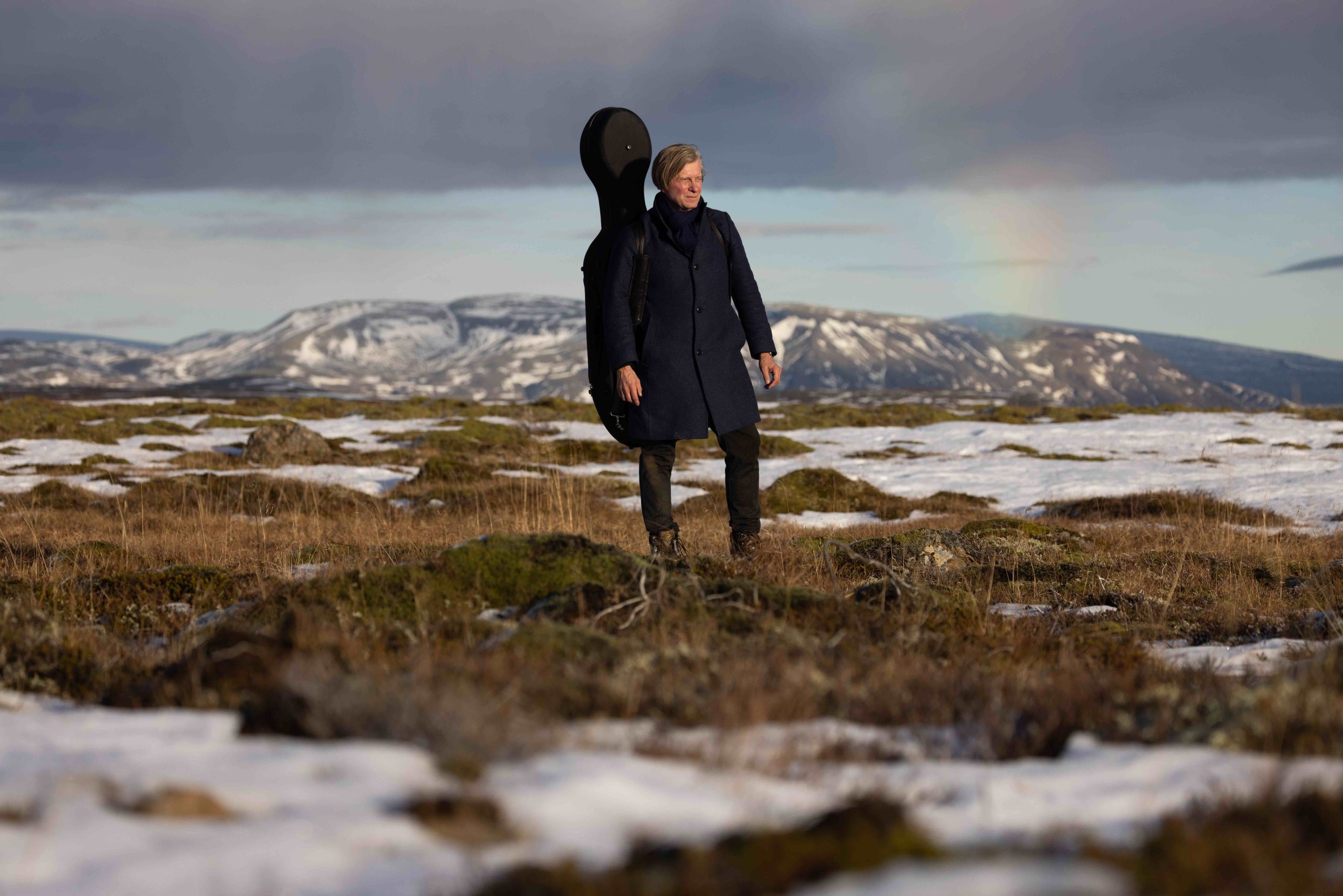
There are albums designed to command attention, and there are albums that quietly reshape the way we experience the world around us. On Music for Walking, Icelandic composer and cellist Eythor Arnalds delivers the latter, crafting an immersive collection of contemporary classical compositions that feel less like a traditional album and more like a gentle invitation to slow down, breathe, and reconnect with both nature and ourselves.
Built around the simple but profound act of walking, Music for Walking transforms movement into meditation. Across ten beautifully understated compositions, Arnalds blurs the lines between cinematic ambience, minimalist classical music and mindful listening, creating a record that unfolds with remarkable patience and emotional clarity. Rather than demanding immediate attention, it rewards quiet immersion, revealing new emotional textures with every listen.
Recorded alongside the Reykjavík Symphony Orchestra at the stunning Harpa Concert Hall and produced with Grammy-nominated engineer Bergur Þórisson, the album possesses an extraordinary sense of space. Every piano note, cello phrase and orchestral swell feels meticulously placed, allowing silence to become as meaningful as sound itself. The production is pristine without feeling clinical, preserving the warmth and intimacy that define Arnalds’ compositions.
The emotional centrepiece arrives in the form of “Progression,” a breathtaking meditation on growth and transformation. Built around gently repeating broken chords, delicate harp and piano ostinatos, and slowly unfolding string arrangements, the composition mirrors the steady rhythm of footsteps moving through changing landscapes. Arnalds’ cello enters with quiet authority, guiding the piece toward an understated emotional crescendo that never feels forced. It’s a masterclass in restraint, proving that music doesn’t need dramatic shifts to leave a lasting emotional impression.
Throughout the record, Arnalds embraces repetition not as repetition for its own sake, but as a compositional language that mirrors breathing, walking and reflection. Tracks such as “Body of Water,” “Opening,” and “Promenade No. 7” drift effortlessly between ambient textures and contemporary classical minimalism, encouraging listeners to abandon the constant pursuit of destination in favour of appreciating the journey itself.
The album inevitably invites comparisons to artists such as Max Richter, Brian Eno, Nils Frahm, Hildur Guðnadóttir and fellow Icelander Ólafur Arnalds. Yet while traces of those influences remain audible, Music for Walking never feels derivative. Eythor Arnalds has developed a distinctive compositional voice rooted in Iceland’s vast landscapes and quiet solitude, creating music that is deeply personal while remaining universally accessible.
The accompanying visual work for Progression, directed by filmmaker Karim Iliya, further enriches the album’s philosophy. Sweeping shots of glaciers, volcanic terrain, drifting icebergs and expansive Arctic skies perfectly complement the music’s gentle momentum, reinforcing the idea that movement exists everywhere—even within apparent stillness. Together, the music and visuals become a celebration of nature’s quiet resilience and humanity’s place within it.
What makes Music for Walking particularly compelling is its refusal to compete with the noise of modern life. In an age dominated by constant stimulation, Arnalds offers something increasingly valuable: permission to slow down. These compositions don’t seek instant gratification or emotional manipulation; instead, they create space for contemplation, allowing listeners to bring their own thoughts and experiences into the music.
Far more than an ambient listening experience, Music for Walking succeeds because of its emotional sincerity. Every composition feels purposeful without becoming overly conceptual, balancing technical precision with genuine feeling. Arnalds understands that sometimes the most profound musical statements are made through subtlety rather than spectacle.
With Music for Walking, Eythor Arnalds delivers one of the year’s most quietly captivating contemporary classical releases. Elegant, restorative and deeply immersive, it stands as both a beautifully realised artistic statement and a gentle reminder that progress isn’t always measured by speed. Sometimes the most meaningful journeys begin simply by putting one foot in front of the other.
Related Stories
Level Up Distribution: Empowering Independent Artists to Take Their Music to the Next Level
Founded by veteran artist, producer, and A&R professional Ace Drucci aka Anthony Ratliff, Level Up Distribution is...

Todd Barrow Embraces Faith, Resilience, and Second Chances Through “Sit Back and Breathe”
Hitting rock bottom can make the future feel impossible to imagine, but sometimes the most difficult chapters become...

Cataleya Meadows asks what perfectionism costs when the body becomes the stake
On her dark pop single ‘Skin in the Game,’ Cataleya Meadows follows a performer under the spotlight, tracing...