
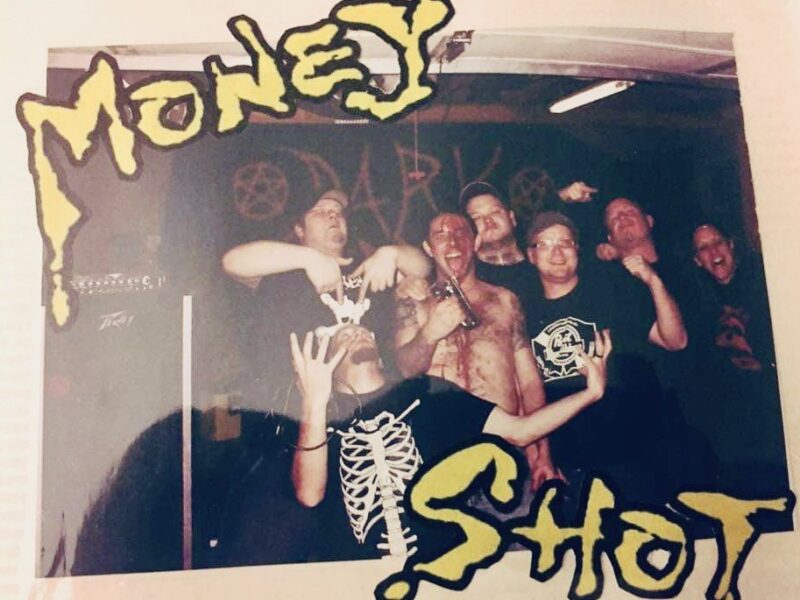
For Todd Hogan, punk rock was never a phase. It started early, shaped by the sounds of Ozzy Osbourne, Black Sabbath, and Judas Priest, before the raw force of Ramones and The Stooges pushed things further. The turning point came when he saw Billy Idol live at Six Flags in Dallas. That moment locked something in. Music was no longer just something to listen to. It became the direction his life would take.
Not long after, Hogan formed XXX Smut with two close friends, setting the foundation for what would become a thirty year run in underground punk. Growing up in a Midwest town where punk was not exactly welcome, the band quickly built a reputation the hard way. Their early shows were chaotic and unpredictable, culminating in a now legendary performance in Champaign, Illinois that got them banned after just one night. It was messy, loud, and impossible to ignore.
That rejection did not slow them down. It fueled them. As word spread, a following began to grow beyond their hometown. Fans who connected with their energy started showing up at out of town gigs, turning XXX Smut into a name that carried weight in underground circles. Over time, even the venues that once shut them out began to take notice again, proving that persistence can reshape perception.

For Hogan, the biggest achievement is not tied to a single release or moment. It is the longevity. Thirty years of XXX Smut, a catalog that includes albums, seven inch records, and a feature on TKO Records’ tribute to Antiseen. Much of that material, once difficult to find, has now found new life on streaming platforms, allowing a new generation to tap into the band’s history.
Connection has always been at the core of the experience. Whether it is sharing a drink after a show or talking directly with listeners online, Hogan keeps things personal and grounded. That approach reflects the spirit of punk at its best, where the line between artist and audience is thin and the community matters as much as the music itself.
Looking back, there is also a sense of hard earned perspective. Hogan admits that much of the band’s early history was never properly documented, with recordings and memorabilia lost over time. It is a reminder of how fast moments can disappear, even when they feel permanent at the time.
Today, Hogan remains as active as ever, balancing multiple projects including XXX Smut, Skeletons Crew, and new solo releases. The drive has not faded. If anything, it has become more focused. Thirty years in, he is still creating, still performing, and still pushing forward with the same energy that started it all.
In the end, Todd Hogan’s story is not about perfection or polish. It is about endurance, noise, and staying true to the chaos that built him in the first place.